EAST-WEST CORRIDOR LIGHT RAIL TRANSIT PROJECT (ORLEANS TO KANATA) - ENVIRONMENTAL ASSESSMENT - TERMS OF REFERENCE
Report to/Rapport au :
Transportation Committee / Comité des transports
and Council / et au Conseil
3 February 2005 / le 3 février 2005
Submitted by/Soumis par : Ned Lathrop, Deputy City Manager/Directeur municipal,
Planning and Growth Management / Urbanisme et Gestion de la croissance
Contact Person/Personne ressource : Vivi Chi, Manager
Transportation and Infrastructure Planning
(613) 580-2424 x21877, vivi.chi@ottawa.ca
REPORT RECOMMENDATION
That the Transportation Committee recommend Council:
1. Approve the Terms of Reference for the East-West Corridor Light Rail Transit Project (Orleans to Kanata) Environmental Assessment.
2. Direct staff to submit the Terms of Reference to the Ministry of the Environment for approval in accordance with Section 6 (1) of Ontario's Environmental Assessment Act.
RECOMMANDATION DU RAPPORT
Que le Comité des transports recommande au Conseil municipal :
1. d’approuver le cadre de référence pour l’évaluation environnementale du corridor est-ouest du train léger sur rail (Orléans à Kanata).
2. d’enjoindre le personnel de soumettre le cadre de référence au ministère de l’Environnement pour approbation conformément à l’article 6(1) de Loi sur les évaluations environnementales de l’Ontario.
EXECUTIVE SUMMARY
Assumptions and Analysis:
The City's Transportation Master Plan identifies an expanded rapid transit network as key to achieving the goal of increasing the overall peak hour transit modal split from 17% to 30% by 2021. This expanded network was developed through the City's Rapid Transit Expansion Study (RTES), which was approved by Council on 26 February 2003. The expansion of LRT service into the downtown and to Riverside South (North-South LRT Corridor) was identified as the top priority project for implementation, followed by an East-West Light Rail Corridor. Following on from the RTES, the Ottawa Rapid Transit Expansion Program (ORTEP) Implementation Strategy identified the immediate undertaking of the planning work as critical to meet the implementation timeframe for the light rail projects. On 24 September 2003 City Council received the ORTEP Implementation Strategy report and authorized the commencement of the Environmental Assessment Studies for the North-South and the East-West Corridor LRT projects.
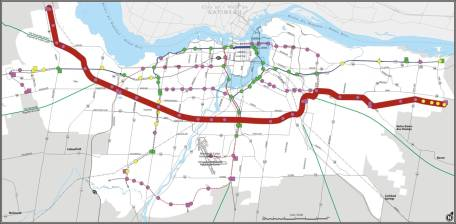
Accordingly, staff prepared the Statement of Work (SoW) for the East-West Corridor LRT Project as envisaged in RTES and ORTEP (Figure 1). The SoW described the study’s scope of work, methodology for assessment, public consultation and deliverables. Transportation and Transit Committee approved the SoW on 7 April 2004.
Before work commences on the Individual EA, a study Terms of Reference (ToR) must be prepared and submitted to the provincial Minister of the Environment for approval. Once approved by the Minister, the Terms of Reference will set out the framework that will guide and focus the preparation of the EA.
Efforts to date have been focused on the development of the Terms of Reference for this study. This staff report presents the ToR for the East-West Corridor LRT project (Document 5) for Committee and Council approval prior to its submission to the Ministry of the Environment (MOE).
Upon receipt of the ToR, the Ministry will post the ToR on the Environment Bill of Rights Registry, thus initiating a maximum12-week review period that includes 30 days (at the outset) for public review. Upon completion of the review period, the Minister of the Environment can approve, amend, or reject the ToR. Once approval has been received, the City can proceed with the EA in accordance with the established ToR.
Financial Implications:
There are no financial implications as a result of this report. Funding for this study has been committed within the 2004 Capital Budget, Order No. 902973 – Smart Growth Rapid Transit Environmental Assessment Studies.
Public Consultation/Input:
In developing the ToR document, the study team consulted with the general public, agencies and stakeholders. The ToR presented herein incorporates all relevant feedback and comments received through the consultation process. A detailed consultation summary is attached to the Proposed Terms of Reference (Document 5).
RÉSUMÉ
Hypothèses et analyse :
Le Plan directeur des transports de la Ville d’Ottawa fait de l’expansion du réseau de transport en commun rapide l’un des principaux moyens d’atteindre l’objectif consistant à faire passer de 17 p. 100 à 30 p. 100 d’ici à 2021 la part des déplacements assurée par le transport en commun en périodes de pointe. Le réseau élargi a été défini dans le cadre de l’Étude sur l’expansion du réseau de transport en commun rapide (ÉERTCR), que le Conseil a approuvée le 26 février 2003. On a accordé la priorité absolue à l’expansion du service de train léger sur rail jusqu’au centre-ville et jusqu’à Riverside-Sud (couloir nord-sud), suivie de l’établissement d’un couloir est-ouest. Selon la Stratégie de mise en œuvre du Programme d’expansion du réseau de transport en commun rapide d’Ottawa (PERTCRO), élaborée à la suite de l’ÉERTCR, il est crucial d’entreprendre les travaux de planification immédiatement pour pouvoir respecter le calendrier d’exécution des projets d’expansion. Le 24 septembre 2003, le Conseil a pris connaissance du rapport sur la Stratégie de mise en œuvre et autorisé le lancement des études d’évaluation environnementale pour les couloirs nord-sud et est-ouest du réseau de train léger sur rail.
Le personnel a donc rédigé l’énoncé des travaux pour le Projet du couloir est-ouest prévu par l’ÉERTCR et le PERTCRO (figure 1). Ce document décrivait la portée de l’étude, la méthode d’évaluation et de consultation publique ainsi que les produits à livrer. Le Comité des transports et des services de transport en commun a approuvé l’énoncé des travaux le 7 avril 2004.
Avant que l’évaluation environnementale ne puisse débuter, il faut en produire le cadre de référence et le soumettre à l’approbation du ministère de l’Environnement. Une fois approuvé, le cadre de référence guidera la préparation de l’évaluation environnementale.
Les efforts déployés jusqu’à maintenant ont surtout porté sur l’élaboration de ce cadre de référence. Le rapport produit par le personnel présente le cadre de référence du Projet du couloir est-ouest (document 5), que le Comité et le Conseil devront approuver avant qu’il ne soit soumis au ministère de l’Environnement.
Une fois qu’il aura reçu le cadre de référence, le ministère de l’Environnement l’inscrira au Registre de la Charte des droits environnementaux, ce qui marquera le début d’une période d’examen de 12 semaines (au maximum), qui comprendra 30 jours d’examen par le public (au début de la période). Par la suite, le ministère de l’Environnement pourra approuver, modifier ou rejeter le cadre de référence. Lorsque celui-ci aura été approuvé, la Ville pourra s’en servir pour réaliser l’évaluation environnementale
Répercussions financières :
Le présent rapport n’a pas de répercussions financières. Le financement de l’étude était prévu dans le budget des immobilisations de 2004, poste no 902973 – Croissance intelligente, Études d’évaluation environnementale du transport en commun rapide.
Consultation publique / commentaires :
L’équipe chargée de l’étude a consulté la population ainsi que les organismes et les intervenants concernés au moment d’élaborer le cadre de référence. Celui-ci tient compte de l’ensemble des commentaires pertinents qui ont été formulés au cours des consultations, dont un résumé détaillé accompagne le cadre de référence proposé (document 5).
BACKGROUND
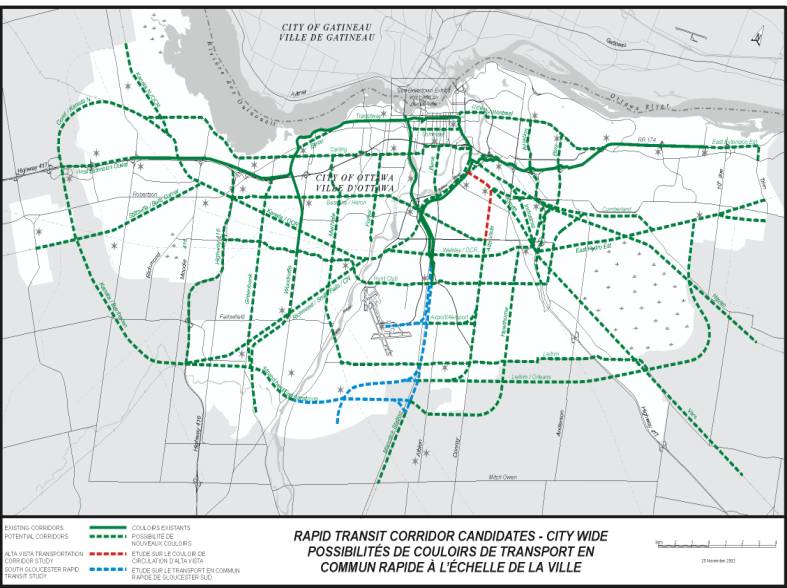
In 2002, the City of Ottawa initiated the Rapid Transit Expansion Study (RTES). The purpose of RTES was to develop a strategic plan for rapid transit in Ottawa over the next 20 years, taking into consideration region-wide growth projections. The city’s population is forecasted to increase by 50% in the next 20 years, from 800,000 to 1,200,000 – with the number of jobs increasing from 500,000 to 750,000. RTES also assumed that transit travel would double from about 17% today to about 30% by 2021. Given the increase in population, this means that the number of transit trips would almost triple from 87 million to 250 million annually over the next 20 years. These land use, population and employment forecasts were used to identify travel demand patterns for future rapid transit. The strongest travel demand patterns were matched with potential transit corridors (Document 1) in a screening process to determine the best fit. Potential rapid transit corridors were identified from previous transportation plans, stakeholder/public consultation, and field observations. Then, the most promising corridors were combined into various rapid transit network and matched with suitable technologies. These network options provided broad coverage using a complementary system of buses and light rail vehicles.
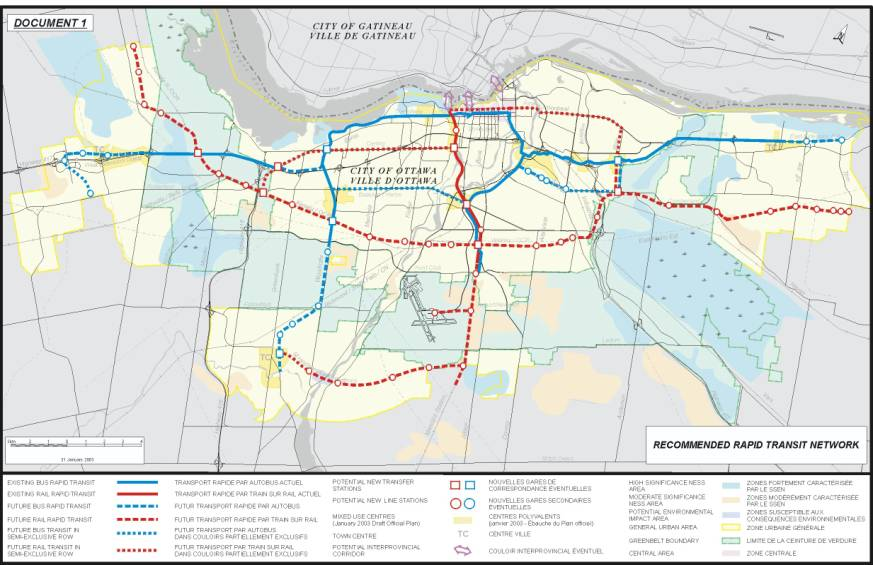
The resulting recommended network was approved by the Transportation and Transit Committee on 19 February 2003 and by Council on 26 February 2003. The approved Rapid Transit Network (Document 2) formed the basis for the rapid transit component of the Transportation Master Plan. Upon approval of RTES, staff was directed to develop an implementation strategy for this long-term plan, including timelines, funding and partnership options, and preliminary costs.
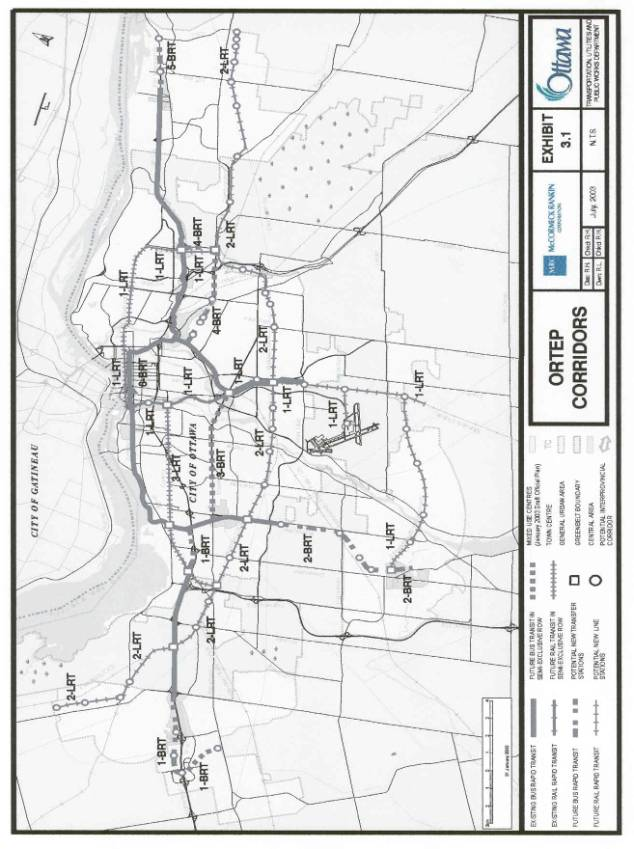
In July 2003, staff completed the implementation strategy for the Ottawa Rapid Transit Expansion Program (ORTEP). The purpose of this undertaking was to develop a detailed work program for the overall rapid transit plan, taking into consideration the required planning, approval, design and construction stages. The rapid transit corridors identified in RTES were regrouped into 3 LRT and 6 BRT corridors as shown in Document 3:
Light Rail Transit Projects
- (1-LRT) North-South Corridor (O-Train Expansion Corridor – Priority Project)
- (2-LRT) East-West Corridor (including an interim BRT Cumberland Transitway)
- (3-LRT) Carling Corridor
Bus Rapid Transit Projects
- (1-BRT) West Transitway Corridor
- (2-BRT) Southwest Transitway Corridor
- (3-BRT) Baseline Corridor
- (4-BRT) Hurdman to Blair Corridor
- (5-BRT) East Transitway Corridor
- (6-BRT) Albert/Slater Corridor
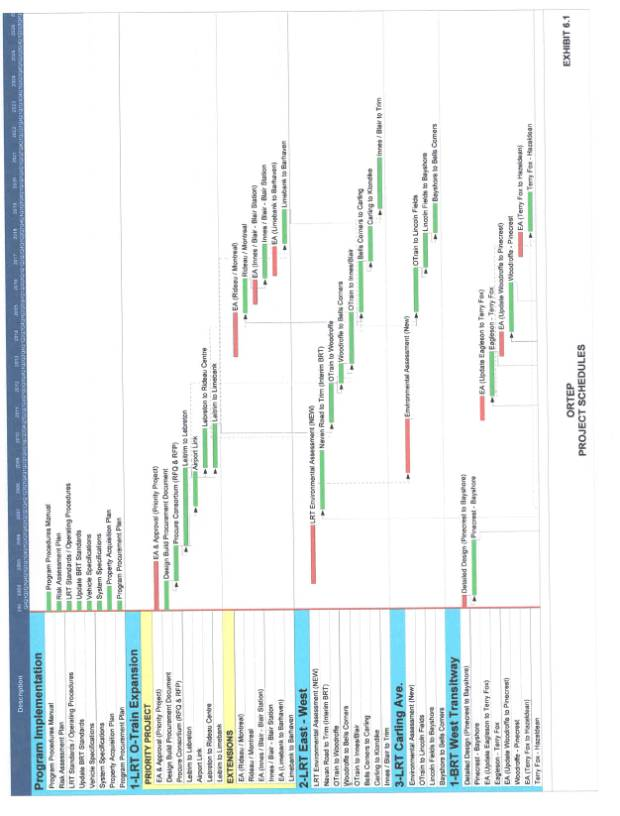
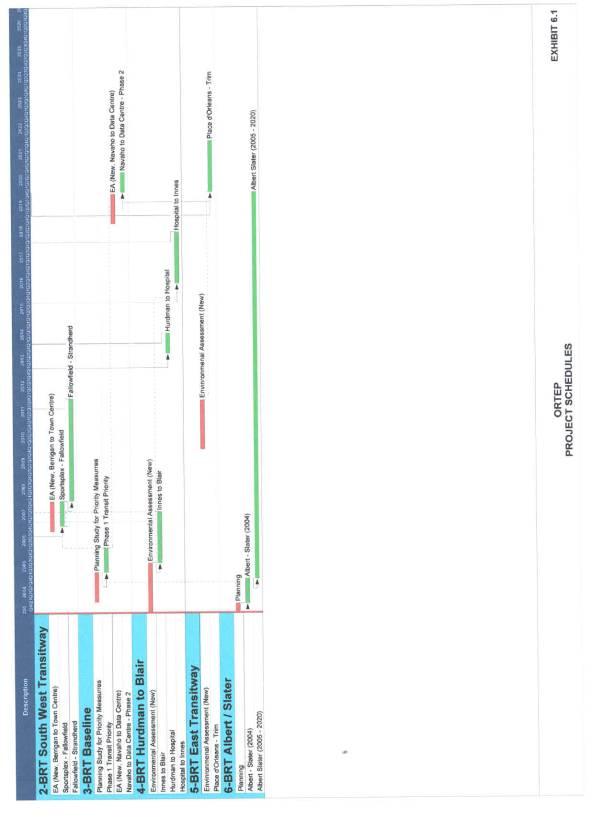
The ORTEP schedules, outlined in Document 4, generally follow the priorities set in the RTES study and are based on the logical rollout of each project and their implementation interdependencies. ORTEP identified the immediate undertaking of the planning work as critical to meet the implementation timeframe for the light rail projects. The planning work for the North-South and the East-West LRT projects were recommended to go forward as the first initiative, with others rolling out over subsequent years.
On 24 September 2003 Council received the Ottawa Rapid Transit Expansion Program (ORTEP) Implementation Strategy report and approved the following motions:
1. Proceed immediately with the Environmental Assessment for the priority O-Train Expansion LRT line from Rideau Centre to Limebank (Riverside South), thus allowing the city to proceed with the option deemed most appropriate once funding mechanisms have been confirmed;
2. Proceed with the Environmental Assessment on the East-West LRT corridor.
The North South LRT priority project Environmental Assessment is now well underway, with a study completion date of September 2005.
Staff prepared the Statement of Work (SoW) for the East-West Corridor LRT Project as envisaged in RTES and ORTEP (Figure 1). The SoW described the study’s scope of work, methodology for assessment, public consultation and deliverables. The SoW was approved by the Transportation and Transit Committee on 7 April 2004. Following this, Delcan Corporation was appointed as the EA study consultant in accordance with the City's Purchasing by-law for consultant services.
FIGURE 1 E-W LRT Corridor as identified in RTES and ORTEP
Efforts to date have been focussed on the development of the Terms of Reference for this study. This report is a follow-up to the approved Statement of Work and the first step towards undertaking the environmental assessment.
DISCUSSION
The study is being carried out as an Individual EA in accordance with the Ontario Environmental Assessment Act (OEAA) and is being coordinated with the requirements of the Canadian Environmental Assessment Act (CEAA). The technical and consultation efforts required to satisfy both acts will be integrated to avoid duplication.
Under Section 6 (1) of the OEAA, a study Terms of Reference (ToR) must be prepared and submitted to the Ministry of the Environment (MOE) for approval prior to commencing an Individual EA study. The ToR provides the framework for preparing the EA and serves as a benchmark for reviewing the EA.
The ToR for the East-West Corridor LRT project (Document 5) sets out the study requirements and describes the methodology for conducting the EA, including:
§ Project description and purpose;
§ Work plan outlining the process to be followed and activities to be carried out in the study including:
· General environmental assessment requirements;
· Alternatives to be considered;
· Description of the existing environment;
· Potential environmental effects;
· Assessment and evaluation processes;
· Preferred alternative development;
· Capital and operating cost assessment;
· Monitoring strategy; and
· Amending procedure
§ Consultation Plan; and
§ Documentation
Upon Committee and Council approval of the ToR, the City will submit the document to the MOE. The MOE will post the ToR on the Environment Bill of Rights Registry, thus initiating a maximum12-week review period that includes 30 days (at the outset) for public review. Upon completion of the review period, the Minister of the Environment can approve, amend, or reject the ToR. Once approval has been received, the City can proceed with the EA in accordance with the established ToR.
Revision to Study Area – West End Limit
The Rapid Transit Expansion Study (RTES) identified two rapid transit corridors to serve Kanata. A Light Rail Transit (LRT) corridor to Kanata North and a Bus Rapid Transit (BRT) corridor to Kanata West parallel to Highway 417. The study area (Figure 2) was revised to consider both route options. The two options will be evaluated to determine which technology best serves the existing and future growth.
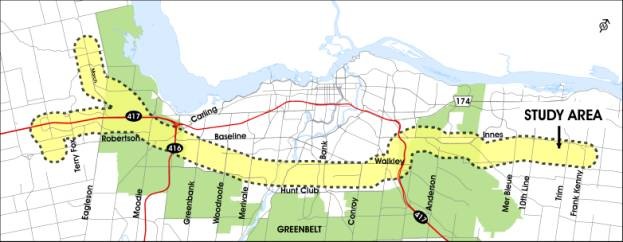
Figure 2. Study Area
Summary of Consultation Feedback on the Draft ToR:
In general, there is support for this study and many residents would like to see this project implemented sooner than later. Over 40 written submissions were received. Major issues and resulting action plan/responses are summarised below:
Study Boundary:
The study area needs to be extended both inside and outside the urban boundary (e.g., Stittsville, Carp, Kemptville, Navan, Arnprior, downtown Ottawa).
Response: This route and resultant study area were identified in the Council-approved RTES and defined as a City priority within the next 20 years. The project would not preclude expansion to other areas as required in the future.
Transit Priorities:
A rapid transit link from Kanata to downtown should have a priority over the East-West LRT.
Response: The West Transitway (West Urban Community) Environmental Assessment was completed in the late 1990’s and the project is identified in the TMP in Phase 1 (implementation by 2008). Funding for design and implementation is needed to proceed further with this project.
EA Harmonization process:
The tasks for the EA Study should include steps to fulfill the requirements of the Canadian Environmental Assessment Act as a harmonized report.
Response: The Canadian Environmental Assessment Agency (CEAA) and the Ontario Ministry of the Environment have been working together to develop a coordinated approach. The ToR document has been modified based on the advice received from CEAA to incorporate specific text on the early and ongoing involvement of federal agencies and the development and circulation of a "Project Description".
Alternative Solutions:
If the project is the East-West Corridor LRT project, why is the widening of roads being considered?
Response: The EA Act requires that all reasonable alternative options be considered and examined.
Environmental Indicators: Additional environmental indicators such as human health effects and quality of life should be included.
Response: These indicators have been added.
CONSULTATION
In developing the ToR document, the study team consulted with the general public, agencies and stakeholders. The ToR presented herein incorporates all relevant feedback and comments received through the consultation process.
Meetings were held on 16 November 2004 with the Agency Consultant Groups (Internal and External) and the Public Consultation Group to present the draft ToR and solicit feedback.
Three Open Houses were held to present the study and the draft ToR to the general public at the following places and dates:
Sir Wilfrid Laurier Secondary School (East) - 30 November 2004
Jim Durrell Centre, (Central) - 1 December 2004
John Mlacak Centre, (West) - 2 December 2004
Public notification of the study commencement and the open houses appeared in the Citizen, the Sun, and Le Droit on the 19th and 26th of November 2004 and on the City’s website. A total of 116 people attended the three open houses. Over 40 comment sheets were received.
MOE and CEA Agency representatives reviewed the draft ToR and provided a coordinated response on 16 November 2004.
A detailed consultation summary is attached to the Proposed Terms of Reference (Document 5).
FINANCIAL IMPLICATIONS
There are no financial implications as a result of this report. Funding for this study has been committed within the 2004 Capital Budget, Order No. 902973 – Smart Growth Rapid Transit Environmental Assessment Studies.
SUPPORTING DOCUMENTATION
Document 1 – RTES – Potential Corridors
Document 2 – RTES – Recommended Network
Document 3 – ORTEP – LRT and BRT Projects
Document 4 – ORTEP – Project Schedules
Document 5 – East-West Corridor Light Rail Transit Project (Orleans to Kanata) Environmental Assessment – Terms of Reference (←Click here to view Document 5)
DISPOSITION
If needed, staff will finalize the Terms of Reference to incorporate any changes made by Committee and Council and submit the document to the Ministry of the Environment for approval.
RTES - POTENTIAL CORRIDORS Document 1
RTES – RECOMMENDED NETWORK Document 2
EP – LRT AND BRT PROJECTS Document 3
ORTEP - PROJECT SCHEDULES Document 4